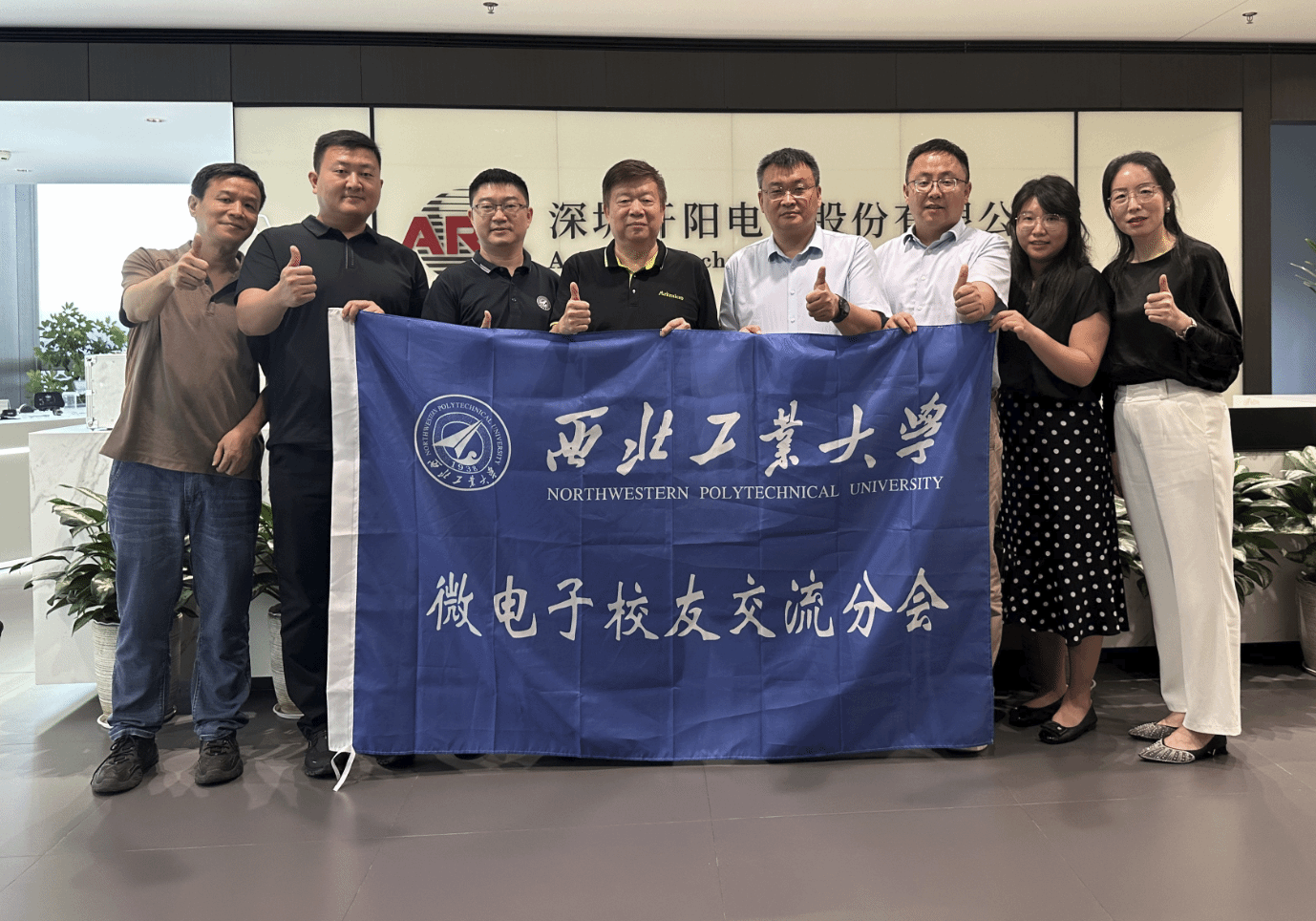
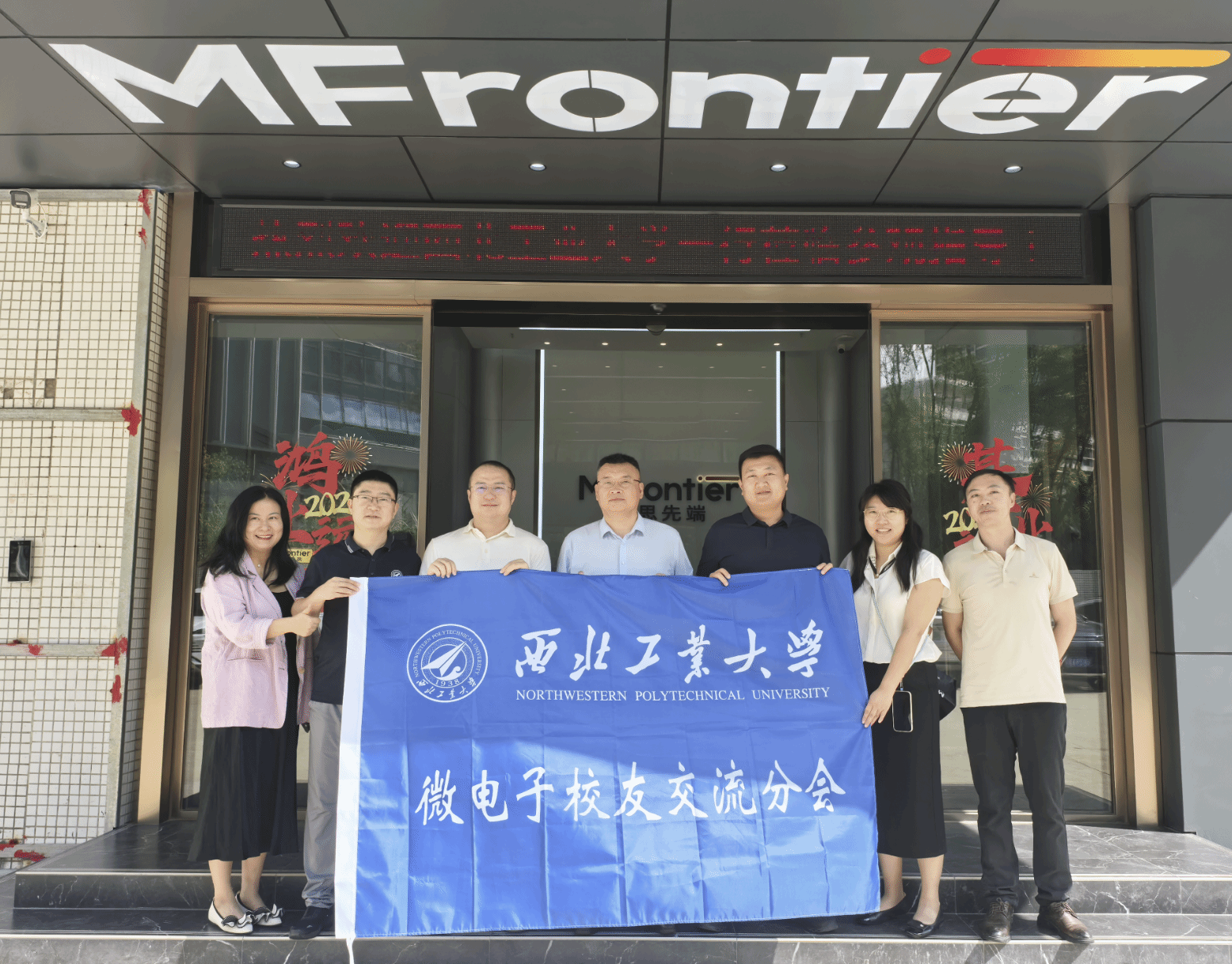
To further deepen university–industry cooperation, advance the integrated development of industry, academia, and research, and better align talent cultivation with industrial needs, a delegation led by Dean Ma Binghe of the School of Integrated Circuits And Microelectronics visited Shenzhen from September 10 to 11 for an industry–academia–research exchange. The delegation toured two alumni-founded enterprises and attended a council meeting of the Alliance for Industry–University Integration Development of Demonstration Microelectronics Schools, achieving fruitful results.
On September 10, Dean Ma and his delegation visited Kaiyang Electronics Co., Ltd., an alumni enterprise. Recognized as a national-level “Little Giant” specialized and innovative enterprise and a national high-tech company, Kaiyang Electronics has built a strong reputation in automotive electronic chips through outstanding technical capability and product quality. Shi Ling, founder and chairman of Kaiyang Electronics, warmly welcomed the delegation and presented the company’s featured products, development history, and core strengths. Dean Ma introduced the School’s disciplinary advantages, faculty resources, and talent-training system. The two sides held in-depth discussions on a range of key topics and agreed to further build a university–industry cooperation platform and jointly tackle technical challenges in automotive electronic chips. Alumni accompanying the exchange included Liu Shiwei, Secretary-General of the Microelectronics Alumni Exchange Branch of the Northwestern Polytechnical University Alumni Association; Wu Bin, Deputy Secretary-General; Cai Ruilong, General Manager of Xi’an Jingdiao Software Technology Co., Ltd.; and Yu Yuanyuan of Galaxy Securities.
On the morning of September 11, the delegation visited Shenzhen Meisi Advanced Electronics Co., Ltd. A national high-tech enterprise and a specialized and innovative “Little Giant” company, Meisi focuses on MEMS sensors and the design and manufacture of precision optics, providing global users with high-quality smart sensors, optical components, and industry application solutions, and demonstrating notable technical strengths and market competitiveness. Chairman Wu Bin warmly received the delegation and led a tour of the company’s production lines and testing workshops. The two sides then engaged in lively discussions on corporate development and university–industry cooperation, reaching consensus to give full play to their respective advantages and establish a long-term, stable partnership in technology research and development as well as talent exchange, jointly advancing technological innovation and industrial development in the field of MEMS sensors.
On the afternoon of September 11, Dean Ma and the delegation attended the Second Meeting of the Second Council of the Alliance for Industry–University Integration Development of Demonstration Microelectronics Schools. Together with representatives from demonstration microelectronics schools and related enterprises nationwide, they exchanged views on industry–university integration, innovation in talent-cultivation models, and the translation of research outcomes. The delegation shared Northwestern Polytechnical University’s experience and practices in industry–academia–research cooperation, and reached consensus with participating parties on further strengthening collaboration among alliance members, contributing NWPU’s strength to the integrated development of industry and academia in the national microelectronics sector.
The two-day exchange not only strengthened ties between the School of Integrated Circuits And Microelectronics and alumni enterprises and built new bridges for university–industry cooperation, but also injected fresh ideas into the School’s talent cultivation and research innovation. Looking ahead, the School of Integrated Circuits And Microelectronics will continue to uphold the philosophy of integrated industry–academia–research development, further deepen cooperation with enterprises and industry associations, cultivate more high-caliber talent for China’s microelectronics industry, and promote high-quality industrial development.